

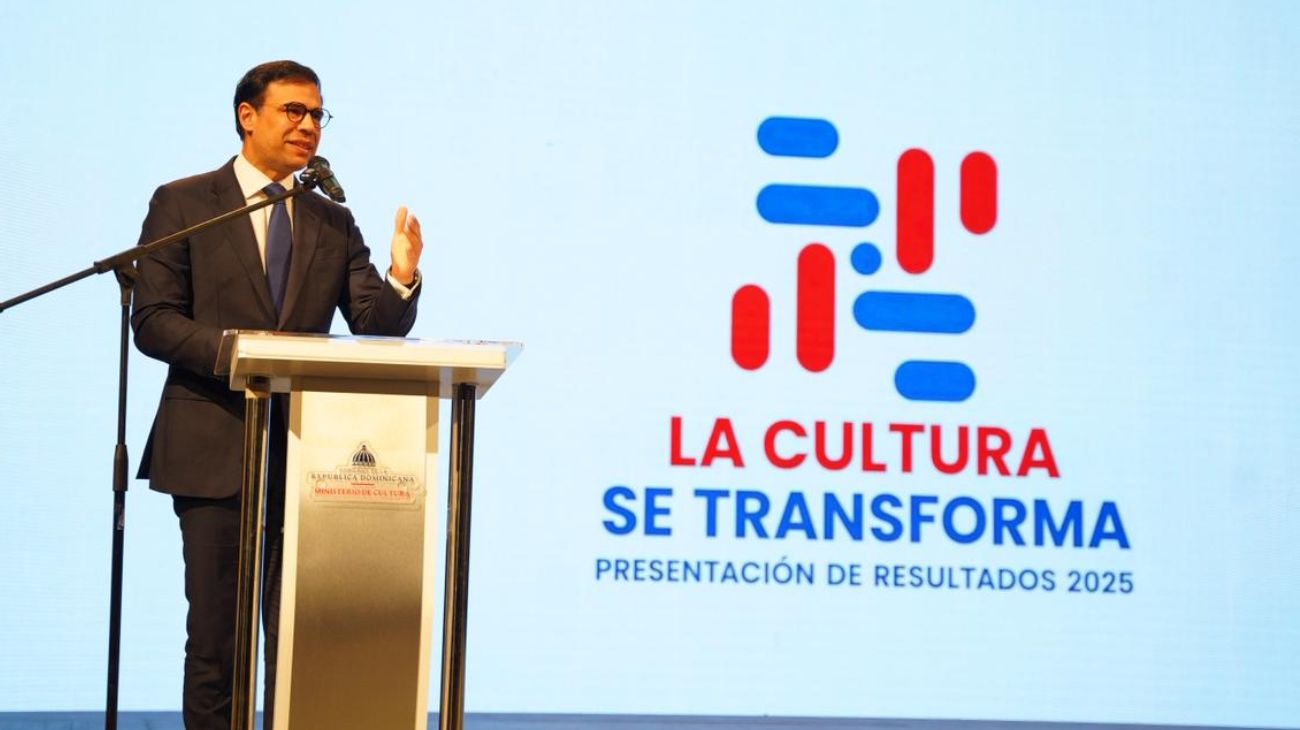
SANTO DOMINGO, Dominican Republic – The Dominican Republic's Ministry of Culture presented its strategic outlook for the year 2025 and beyond on Tuesday, with Minister Roberto Ángel Salcedo detailing the administration's progress and future goals during an event at the Palace of Fine Arts. The presentation, themed \"Culture Transforms,\" underscored the ministry's advancements.
\nSalcedo emphasized that the nation is undergoing a profound institutional transformation, with culture serving as a vital cornerstone for social cohesion, education, well-being, and sustainable development.
\nThe minister explained that the ministry's initiatives are anchored in the Institutional Strategic Plan 2025–2028. This plan aligns with the National Development Strategy 2030, the National Multi-Year Public Sector Plan, and the Sustainable Development Goals, providing a roadmap to reorganize and strengthen the public cultural system.
\nThe strategic plan was developed through extensive territorial consultations, international studies, the 2024 National Cultural Consumption Survey, and Cultural Dialogues. These efforts helped identify challenges such as inadequate infrastructure, a lack of professionalization in the sector, low public appreciation for culture, and complex administrative processes. Salcedo stated that these challenges are being converted into opportunities for institutional modernization.
\nThe ministry's strategy is built upon five core pillars: safeguarding cultural heritage, revitalizing cultural identity, fostering cultural and creative industries, promoting artistic education and territorial decentralization, and enhancing internationalization.
\nAs a testament to its institutional improvements, the ministry achieved a score of 84.44 points in the Public Administration Monitoring System, reflecting sustained gains in efficiency and quality.
\nA central tenet of Salcedo's address was the cultural decentralization policy. Over the past 10 months, the ministry conducted meetings and assessments across all 31 provinces and the National District, visiting more than 90 territories. These engagements facilitated diagnostics of cultural spaces and the formulation of local work agendas in collaboration with cultural managers and communities.
\nWithin this territorial deployment, the "Plan Frontera" emerged as a strategic project, specifically targeting border provinces. This initiative involves diagnostic processes, training, and community support to recognize and bolster local cultural identities, aiming to build a comprehensive development agenda. Salcedo declared that the border regions are no longer marginalized but have become priority cultural territories.
\nRegarding artistic programming, Salcedo reported that the "Calle Cultura" and "Tardes de Parque" programs engaged thousands of individuals in municipalities including San Francisco de Macorís, Salcedo, San Pedro de Macorís, Puerto Plata, Azua, La Vega, Monte Plata, and Santo Domingo. Additionally, the Santo Domingo Philharmonic Orchestra performed in Sosúa, Moca, Baní, San Juan de la Maguana, and Dajabón.
\nThe report also highlighted significant cultural infrastructure renovations, including the Narciso González Cultural Center, the National Handicraft Center, the National Music Conservatory, the Dominican Cinemateca, and various halls within the Palace of Fine Arts. Progress was also noted on flagship projects such as the former Boca de Nigua sugar mill and the conversion of the old La Vega Casino into a School of Fine Arts.
\nFurther announcements included the renovation of the La Caleta House of Culture and the establishment of the Santo Domingo East Music Academy.
\nOn the social and educational front, more than 3,700 children and adolescents received artistic training across 15 provinces, while the "Escuelas Libres" programs reached over 3,200 students. The National Youth Symphony Orchestra, comprising 110 young musicians, was also relaunched.
\nSalcedo also underscored the "El Poder de las Buenas Palabras" (The Power of Good Words) initiative. This program promotes coexistence, respect, and citizenship through conscious language use, implemented in educational centers and social spaces as a cultural tool for peace.
\nThe presentation also emphasized the productive orientation of cultural policy, positioning it as a tool for economic development, territorial cohesion, and national competitiveness. The ministry aims to promote cultural and creative industries as generators of employment and economic value.
\nSalcedo asserted that culture must be embraced as a strategic national asset, integrating innovation, identity, and productivity.
\nLooking ahead, the minister outlined institutional challenges, including the launch of a Cultural Information System, a Cultural Innovation Week, and new training platforms. He reiterated that culture remains a primary driver for the nation and an essential public policy for the country's sustainable development.
Sources
Related News
World Bank Officials Praise Dominican Republic's Economic Stability
3 min read
Dominican Republic Launches $106 Million Fund for Irrigation Upgrade
3 min read
Dominican Republic to Overhaul 496 Schools with RD$2 Billion Investment
3 min read
Dominican Government Settles $104 Million Debt with Small Farmers
3 min read